Wednesday, August 1, 2018

F.F. Bosworth Mentioned in Josh McMullen's Under the Big Top: Big Tent Revivalism and American Culture, 1885-1925

Book Notes His Prolific Output as a Writer

By Roscoe Barnes III
Author, F.F. Bosworth: The Man Behind Christ the Healer
Copyright (c) 2018

#FFBosworth
#BosworthMatters
#BosworthMention


F.F. Bosworth's name is sprinkled in several places in the 2015 book  by Josh McMullen titled, Under the Big Top: Big Tent Revivalism and American Culture, 1885-1925 (Oxford University Press). McMullen is assistant professor of History at Regent University. He holds a Ph.D. in History from the University of Missouri-Columbia and a Master's degree in Theology and Church History from Gordon-Conwell Theological Seminary.

In McMullen's view, the tent preachers played an active role "in the shift away from Victorianism and helped in the construction of a new consumer culture in the United States." He grapples with the idea of the United States becoming "the most consumer-driven and yet one of the most religious societies in the western world." He describes in compelling terms the use of entertainment by evangelicals to support their revival meetings, along with their effective use of various media to grow their respective ministries. In short, McMullen sees a strong link between revivalism and consumerism.


Information on Under the Big Top is available here.

McMullen mentions Bosworth in several places. He gives a summary of Bosworth's life history with brief comments on his teachings as a healing evangelist. McMullen writes about several people that had an impact on Bosworth's development as a revivalist. Those people included John Alexander Dowie and Maria Woodworth-Etter. McMullen notes the role that Woodworth played in Bosworth’s revival meetings in Dallas, Texas, that reportedly lasted 10 years. He writes:

It is through her writings that Woodworth became acquainted with F.F. Bosworth. As a pastor in Dallas, Bosworth had read Woodworth’s autobiography, calling it the greatest record of God’s victory over sin and sickness since the Bible. In 1912 Bosworth invited Maria Woodworth to Dallas to help lead a tent revival, which extended from July to September of that year. The joint effort between Bosworth and Woodworth drew people from across the United States as well as England and Canada. Other divine healers even traveled to Dallas to witness the miracles that were said to be occurring nightly at the hands of these two evangelists.

McMullen cites the personal letter of Bosworth that discussed the beating he suffered for preaching to blacks in Hearne, Texas. He also recounts Bosworth's departure from the Assemblies of God over the issue of tongues as the initial evidence of Spirit baptism. Despite breaking fellowship with the Pentecostal denomination, "Bosworth continued to be a major proponent of divine healing," McMullen writes.

McMullen's research includes other commonly known reports about Bosworth, such as the death of Bosworth's first wife, Estella. He correctly notes the importance of Bosworth's book, Christ the Healer, and the evangelist's prolific output as a writer. He explains:


Bosworth was also a prolific writer. His articles on divine healing and revivals appeared constantly in religious periodicals; however, it was the book Christ the Healer for which Bosworth became best known. Written intentionally in “the vocabulary common people understand,” Christ the Healer turned out to be the leading guide of the divine healing movement.

McMullen's study extends to 1925, a time period that saw notable growth and success in Bosworth's ministry. His book, Christ the Healer, was published in 1924. His biography, Joybringer Bosworth, was first published in 1921. It was written by Eunice M. Perkins. It was during the 1920s that Bosworth held some of his largest healing campaigns.

Whatever one thinks of McMullen's argument -- and his views regarding consumerism and revival meetings -- his work shows that Bosworth matters in discussions about church history. McMullen points to him as an important proponent of divine healing whose ministry and writings made a significant contribution to revivalists and the divine healing movement in the United States.


 ---------------------------------------------------------------------------------------

Would you like to know more
about F.F. Bosworth?

Follow the Bosworth Matters blog! 

You can read it here:
ffbosworth.strikingly.com

---------------------------------------------------------------------------------------

For more information:
Visit the F.F. Bosworth page here. Questions about the research and commentary on F.F. Bosworth may be directed to Roscoe Barnes III, Ph.D., via email at doctorbarnes3@gmail.com or roscoebarnes3@yahoo.com. For updates on F.F. Bosworth history, simply follow this blog or @Roscoebarnes3 on Twitter. #ChristTheHealer

Tuesday, July 31, 2018

Prayer at 5-Year Anniversary Luncheon Held by Mississippi Prison

Event Held on Tuesday, July 31, 2018, at MTC/Wilkinson County Correctional Facility

By Chaplain Roscoe Barnes III, Ph.D.
Copyright (c) 2018

#Prayer #PrisonMinistry


------------------------

Our Heavenly Father, Lord God Most High:

We come before you on this special occasion with hearts of gratitude and humility. We thank you for everything we have been able to accomplish to this point, and for what we hope to accomplish in the future.

Today we celebrate a milestone, a precious moment in our history that bears witness to your providential care.

Lord, we can see that we have come a mighty long way. It has not been easy. But through it all, we have faced our challenges with grit and grace, always determined to show our staff, our inmates, and our community, that we care.

As we celebrate our five-year anniversary, we want to thank you for our leadership and our staff, who have worked so hard – and so diligently against the odds -- to bring us to this moment. Indeed, we have come this far by faith.

Lord, we are mindful of the support we have received from our local community, our volunteers, our elected officials, businesses, and individuals. We also thank you for all of our guests who are here today.

As we pray, we ask that your light of goodness and mercy shine upon each of us as we participate in today’s program. And may your blessings be upon the meal that’s prepared for this special event. We ask that this meal would be blessed and sanctified for our nourishment, and that your grace will be known by those who prepared it.

We ask for these things in your name.

And every heart said, Amen.

--------------------------------------

ROSCOE BARNES III, Ph.D., is a writer, chaplain, historian, and former newspaper reporter. He is the author of more than a dozen books and Gospel tracts. For more information about his work and history, see his Personal Profile here or visit his website: http://www.roscoebarnes.net. Connect with him on Twitter (@roscoebarnes3) or by email: roscoebarnes3@yahoo.com.

Saturday, July 28, 2018

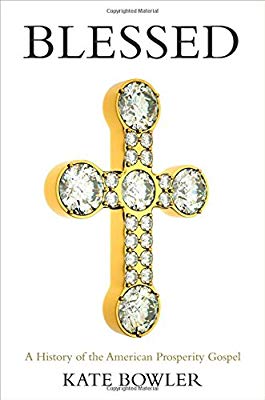
F.F. Bosworth Mentioned in Kate Bowler's Blessed: A History of The American Prosperity Gospel (2013)

She Highlights His Link to E.W. Kenyon

By Roscoe Barnes III
Author, F.F. Bosworth: The Man Behind Christ the Healer
Copyright (c) 2018

#FFBosworth
#BosworthMention
#BosworthMatters


F.F. Bosworth, Pentecostal pioneer and famous healing evangelist, is featured in the 2013 book by Kate Bowler titled, Blessed: A History of The American Prosperity Gospel (Oxford University Press).  Bowler, who holds a Doctor of Philosophy degree, is an assistant professor of the History of Christianity in North America at Duke University. Her book presents a detailed look at the roots and the rise of the prosperity gospel in the United States and Canada.

Bowler's website suggests Blessed is "the first comprehensive American history of one of the most popular Christian movements in the world today."

Information on Blessed is available here:
https://katebowler.com/research

In her reference to Bosworth, Bowler discusses his relationship with E.W. Kenyon and the possible influence that Kenyon had on his understanding of faith and confession. She also reports that a number of Bosworth's articles appeared in Kenyon's Herald of Life newsletter.

Bowler notes that when Bosworth included the chapter, "Our Confession," in his book, Christ the Healer, he fully acknowledged Kenyon's contribution. She writes: "Unlike many others, Bosworth credited Kenyon for his words."

Although Bosworth was known for his work as a Pentecostal revivalist and faith healer, the truth is that he was actually more evangelical and ecumenical in his ministry, especially after 1918. Bowler correctly notes that he "hovered on the margins of Pentecostalism." She points out the fact that he left the Assemblies of God in 1918 because he did not believe in tongues as the initial evidence of Spirit baptism. He later spent decades as a minister with the Christian and Missionary Alliance.

Like other historians of Pentecostal church history, Bowler recounts Bosworth's ministry with William Branham, Gordon Lindsay, and the Voice of Healing in the 1940s and 1950s. She suggests that he was instrumental in keeping Kenyon's teachings before a new generation of healing evangelists. She explains:

"As his healing practices and revival techniques proved to be a textbook for later healing revivalists, Bosworth cemented Kenyon's imprint on divine health long after anyone remembered Kenyon's name."

In several places Bowler shows how Bosworth's teachings on healing and health were similar to Kenyon's. She gives attention to "appropriating faith" and "confession," among other topics.

She makes one claim, however, that raises concern about Bosworth and the subject of prosperity. She asserts: "Though Bosworth never preached about prosperity, he placed the righteous individual, speaking faith-filled words, at the heart of divine healing."

It isn't clear why she makes that claim regarding prosperity, but the truth is, Bosworth did preach and write about prosperity. In fact, he wrote, The Key to The Windows of Heaven or God's Financial Plan, with supplement, Should Sinners Tithe?

The 24-page booklet makes an argument for paying tithes. It discusses the material blessings for doing so, as well as the temporal blessings that come through giving. Bosworth described New Testament giving as "sowing and reaping."

-----------------------------------------------------------------------------

Would you like to know more
about F.F. Bosworth?

Follow the Bosworth Matters blog!

You can start right here:
ffbosworth.strikingly.com

-----------------------------------------------------------------------------

For more information:
Visit ffbosworth.strikingly.com. The Bosworth page is here. Questions about the research and commentary on F.F. Bosworth may be directed to Roscoe Barnes III, Ph.D., via email at doctorbarnes3@gmail.com or roscoebarnes3@yahoo.com. For updates on F.F. Bosworth history, simply follow this blog or @Roscoebarnes3 on Twitter. #ChristTheHealer
Thursday, July 26, 2018

Anne Moody’s Final Resting Place

Family Buries Her Ashes Beside her Mother in Mount Pleasant Missionary Baptist Church Cemetery

By Roscoe Barnes III
Chairman, Anne Moody History Project
Copyright (c) 2018

#AnneMoody

Family of Anne Moody buried her ashes during a special service on Saturday, July 7, 2018, at the Mount Pleasant Missionary Baptist Church Cemetery in Centreville, Miss. From left: Frances Jefferson, her sister; Rev. LeReginald Jones, assistant pastor of Mount Pleasant; Rev. Dr. Roscoe Barnes III;  and Adline Moody, Anne’s sister. 

____________________

CENTREVILLE, Miss. -- Civil Rights Pioneer Anne Moody, author of Coming of Age in Mississippi, is now resting beside her mother, Elmira “Too Sweet” Williams Moody Jefferson, in the Mount Pleasant Missionary Baptist Church Cemetery in Centreville, Miss.

Her sister, Adline Moody, said it was time to bring her home.

Her family held a memorial service – the second one -- on Saturday, July 7, 2018, where they paid their respects and buried her ashes. Anne, who was born and raised in Centreville in southwest Mississippi, died on Feb. 5, 2015, at the age of 74. Her remains were cremated on Feb. 6, 2015. Arrangements were entrusted to Richardson Funeral Home of Clinton, La.

“This is only fitting,” Adline said of the July burial. “This is the perfect place for Anne … next to her mom. Her dad is right over there. She traveled the whole wide world and she ended up right back where she started. Right here at Mount Pleasant.”

The first memorial service was held on Saturday, Feb. 14, 2015, at 2753 Antioch Perkins Road in a rural section of Gloster, Miss. Her ashes had been kept by her son, Sasha Straus, and Adline.

Anne’s grave is adorned with flowers and a monument. The face of the marble structure bears the inscription:

Freedom fighter, Beloved Mother, Daughter and Sister.
Great Humanitarian. You fought the fight.
Rest in peace, Anne.
Love you.

Anne Moody
September 15, 1940 to February 5, 2015

Mount Pleasant donated the piece of land for the burial and Anne’s family provided the monument and the flowers.


Sasha Straus, son of Anne Moody, was one of several family members who participated in her burial ceremony at the Mount Pleasant Missionary Baptist Church Cemetery, Centreville, Miss., on Saturday, July 7, 2018.

‘Modern-day Esther’

The Rev. LeReginald Jones, assistant pastor for Mount Pleasant, officiated the graveside service. He described Anne as a great woman and a freedom fighter. Her burial, he said, brings everything full circle.

“It is an honor for us to have such a heroine to be planted right here, so that when the story is told, they can always come back home,” he said. “They can come back to Anne’s home, and we can tell that story.”

Jones said Anne was like Esther in the Bible, who rose to help her people “for such a time as this.” He said: “Some 50 years ago, I do believe under the providential orchestration of the hand of God, that he called Anne Moody for such a time as this. She was our modern-day Esther” who fought against discrimination and injustice.

Anne’s sister, Frances Jefferson, said the burial was important for Anne and the community.

“She needed to come home,” she said. “Anne left home in her teens and my mother grieved for her when she was away.”

Too Sweet often cried for Anne, fearing for her safety. “She didn’t know where she was,” said Frances. “I couldn’t stand to see my mother cry. She was very protective.”

But now Anne is home, back where her story began, Frances said.

In addition to Adline, Sasha and Frances, a number of other family members and friends attended the ceremony. Family members included Jerry Love, Dorothy Veals, JoAnne Coles, Felix Cole, James Cole, Doris Whitehead, and Elvira Taplin, all cousins of Anne; Sherry Jefferson, wife of Anne’s brother, Ralph Jefferson; and Rosie Powell, former wife of Anne’s brother, Fred Moody Jr.


Dr. Leigh Ann Wheeler, Anne Moody’s biographer, participated in Moody’s memorial service at the Mount Pleasant Missionary Baptist Church Cemetery, Centreville, Miss., on Saturday, July 7, 2018. She is joined here with her husband, Dr. Donald Nieman, and their son, Brady Wheeler-Nieman; and Moody’s son, Sasha Straus.

Anne’s biographer

Friends who attended the event included Dr. Leigh Ann Wheeler, her husband, Dr. Donald Nieman, both of Binghamton University, New York, and their son, Brady Wheeler-Nieman. Wheeler, who is writing Anne’s biography, shared a few words about Anne during the ceremony.

“I want to thank you all for helping me write Anne’s life story,” she said. “I love her. For 25 years, I have taught her book. I first read it when I taught it with my graduate advisor, Sara Evans, in the 1990s and I have taught it to my own students ever since. It’s life-changing for them, more so today than ever.”

Coming of Age was first published in 1968 and has remained in print since that time.

Wheeler said the book is the one book that she assigns that the students always thank her for. They love the book and they actually read it, she said: “It really helps them understand what it was like to grow up as a young black girl in Mississippi in the 40, the 50s, and the 60s -- something that they otherwise would not even begin to even care about, let alone GET!”

Although she never got to know Anne, Wheeler said she’s beginning to know her through Anne’s family and friends. Wheeler and her family donated purple roses for the ceremony. Purple was Anne’s favorite color.

JoAnne and Dorothy, both daughters of Alberta in Coming of Age, shared brief remarks during the ceremony. JoAnne spoke of how excited they used to be to see Anne when they were kids. She said Anne helped put her through college. Dorothy sang “When the Gates Swing Open.”

The Rev. Dr. Roscoe Barnes III, who chairs the Anne Moody History Project, said Anne was like King David in the Bible who “served his own generation by the will of God.” He said that she had great achievements, but she also faced many challenges, enduring a life of highs and lows.

“But in the end, like David, we can say that she served her purpose,” said Barnes. “She served her own generation by the will of God.”

---------------------------------------------------------------------------------------

Would you like to know more about Anne Moody?
Visit the Anne Moody page here!

---------------------------------------------------------------------------------------

For more information:
See the Anne Moody page here
Questions about the Anne Moody History Project may be directed to Roscoe Barnes III via email at doctorbarnes3@gmail.com or roscoebarnes3@yahoo.com. For updates on Anne Moody history and the on-going work of this community service project, simply follow this blog or follow AMHP on Twitter (@AnneMoodyHP). 
#ComingOfAgeinMississippi


Tuesday, July 24, 2018

Rev. Larry Lee, former mayor of Centreville, Miss. planting church in Baton Rouge

Congregation meets behind local airport

By Roscoe Barnes III
Copyright (c) 2018

Rev. Larry Lee

BATON ROUGE, La. -- The Rev. Larry Lee, former mayor of Centreville, Miss., is planting a new church at 8390 Plank Road, Baton Rouge. The church is St. Peter C.M.E. (Christian Methodist Episcopal) Church.

The congregation meets behind Baton Rouge Metropolitan Airport in the fellowship hall of Gordon Feltus Lazard Cathedral Church of God in Christ. It’s located in the Crowley/New Orleans region of the Fourth Episcopal District of the Christian Methodist Episcopal Church.

“We’re planting this church in the greater Baton Rouge area where people can come and share the word of God,” Lee said. “We offer the opportunity to discuss the word and see the will of God for our lives. This is a place for people to come and fellowship and be a family.”

Lee said St. Peter is also “a place where a person can feel comfortable without the weights of legalism and extremism.” The church’s motto is, “Getting Back to Basics as We Envision Our Way Forward in Taking Care of God’s Business.”

Lee began the work in January, after having received the assignment in July 2017. He said the church is Methodist and it follows the Methodist tradition. “We’re focused strictly on the word of God and what it says, and not our opinions,” Lee said.

Lee was recently ordained as a Traveling Elder in the CME denomination. He previously served as a Traveling Deacon. When he began the church plant, he was assisted by the Rev. Rose Mingo of Lake Charles, La.

Lee holds a Bachelor of Arts degree in political science with a minor in criminal justice from Mississippi Valley State University. He is retired from the Louisiana Department of Corrections where he worked 23 years at Angola State Penitentiary.

Lee served as mayor of Centreville from 2009 to 2017. For the past several years, he has been preaching throughout parts of Mississippi and Louisiana. He is currently completing his denomination’s Bishop Course of Study.

Lee and his wife, Linda, live in Centreville. They have a son, Bryan Lee, and daughter, Candace Lee Banks, and five grandchildren.

Bryan, who works with the Louisiana State Police, is married to Maria Lee; Candace is a health science teacher and athletic trainer. Her husband is Freddie Banks.

The church holds Worship Services on the 2nd and 4th Sundays from 11 to 12:30 p.m. and Sunday School on the same days from 9:30 to 10:30 a.m. Wednesday Bible studies are held from 6 to 7 p.m.

The mission statement for the CME denomination emphasizes the ministry of service and sharing the Gospel. It reads: “The Christian Methodist Episcopal Church is called to serve the present age as a sign and instrument of God’s saving grace, making disciples for Christ, nurturing them through preaching and teaching the Word of God, through Christ centered worship, prophetic witness and effective service.”

Additional information is available by calling 225-800-7566 or by visiting www.4thdistrictcme.org or www.facebook.com/stpetercme. Questions may also be sent via email to info@stpetercmechurch.org.

--------------------------------------
ROSCOE BARNES III, Ph.D., is a writer, chaplain, historian, and former newspaper reporter. He is the author of more than a dozen books and Gospel tracts. For more information about his work and history, see his Personal Profile here or visit his website: http://www.roscoebarnes.net. Connect with him on Twitter (@roscoebarnes3) or by email: roscoebarnes3@yahoo.com.


Tuesday, July 17, 2018

Delayed Answers to Prayer

Lessons from the Life of the Apostle Paul

By Roscoe Barnes III
Copyright (c) 2011

#Prayer

Image by Charles Harr

Answers to prayer can sometimes be a mystery, especially when the answers are a long time coming. Sometimes the answers are not what we expect. Such was the case with the Apostle Paul. In his letter to the Romans, he expresses his desire and prayer to visit them.

“For God is my witness, whom I serve with my spirit in the gospel of his Son, that without ceasing I make mention of you always in my prayers; making request, if by any means now at length I might have a prosperous journey by the will of God to come unto you. For I long to see you, that I may impart unto you some spiritual gift, to the end ye may be established; that is, that I may be comforted together with you by the mutual faith both of you and me. Now I would not have you ignorant, brethren, that oftentimes I purposed to come unto you, (but was let hitherto,) that I might have some fruit among you also, even as among other Gentiles” (Romans 1:9-13).

Paul’s experience in receiving the answer to his prayer provides some important lessons for the church. They are lessons that shed light on the mystery of delayed answers to prayer.

1. The answer came with a delay.

The letter to the Romans was written around 57 A.D. At that time, Paul noted his longing to visit Rome. In addition to having prayed to visit the city, he also had often planned to visit in order to be a blessing to the church. His prayer was answered but not overnight. His prayer would not be answered in a month or within a year. In fact, he would not visit Rome until a few years later. Scholars agree that Paul arrived in Rome around 60 A.D.

Sometimes we are discouraged when our prayers are not answered immediately. There are times, however, when God chooses to answer our prayers in His own time. As the saying goes, He answers by saying, “Yes,” “No,” or “Not now.” In Paul’s case, the answer to his prayer was, “Yes, but not now.” The answer, his visit to Rome, would come later.

Prayer involves faith, and “faith is often called upon to wait patiently before God and is prepared for God’s seeming delays in answering prayer,” writes E.M. Bounds. “Faith does not grow disheartened because prayer is not immediately honored. It takes God at His Word and lets Him take what time He chooses in fulfilling His purposes and in carrying on His work.”[1]

2. The answer came with trials.

Several years after praying to visit Rome, Paul began his journey. The trip, however, would be fraught with danger. In the process of receiving the answer to his prayer, Paul endured tragedy, opposition, and persecution. While in Jerusalem, people tried to kill him. He was rescued and put in chains (Acts 21). While sailing to Rome, Paul endured a shipwreck (Acts 27). He arrived in Rome in chains and spent two years under house arrest. Some of the people who listened to his preaching believed on Christ, but others did not believe (Acts 27:24-25).

The things we pray for may come with surprises. They may come with persecution, hard times, or unforeseen trials.

3. The answer came with ministry opportunities.

In spite of the trials that Paul endured, the journey to Rome afforded him opportunities to share the Good News of Jesus Christ. In Jerusalem, he preached in the face of life-threatening persecution, and while in chains. His shipwreck on the island of Malta allowed him to experience divine protection from a snake bite, and witness a miracle of healing that prompted many to believe on Christ.

While bound in chains, Paul could say, “But I would ye should understand, brethren, that the things which happened unto me have fallen out rather unto the furtherance of the gospel” (Philippians 1:12). This may serve to remind us that God can use even our trials for our good and for His purpose (Romans 8:28). Therefore when we pray and our prayers are not answered immediately, we do not have to fret, as the delay may indeed be an opportunity for us to bless others.

4. The answer came with messages for Christian growth.

When Paul finally arrived in Rome, he heard from God and was inspired to write the four letters that we call “The Prison Epistles’: Ephesians, Colossians, Philippians, and Philemon. These epistles were written around 60 A.D. and 61 A.D. Paul desired to impart “some spiritual gift” unto the church in Rome (Romans 1:11). He wished to comfort them in the faith while also being encouraged by them (Romans 1:12). He also wanted to “have some fruit among you also, even as among other Gentiles” (Romans 1:13). From the record in Acts, and the existence of the prison epistles, we can see that Paul’s prayer was answered, but in a much larger way than he expected.

While confined in Rome, God used Paul to bless the local church. Through his writings, he blessed other churches; and by God’s grace, he continues to bless churches throughout the world through his letters. In short, Paul received far more fruit among the Gentiles than he could have possibly imagined. It’s no wonder that he could write, “Now unto him that is able to do exceeding abundantly above all that we ask or think, according to the power that worketh in us” (Ephesians 3:20).

There is one other blessing related to Paul’s delay in visiting Rome: He wrote the letter to the Romans, the theological masterpiece that has blessed the church for nearly 2,000 years. It is the one book in the Bible that answers in detail the most important questions about salvation. According to C. Norman Barlett: “The epistle to the Romans stands pre-eminent among the writings of the Apostle Paul. It is without question the most important production of his pen … No other writing of his has so powerfully influenced the thinking of the Church.”[2]

If Paul had gone to Rome when he wanted to in the beginning, he might have never written the book of Romans. Had his prayer been answered sooner, he would have been in Rome, and therefore had no reason to write his letter. Fortunately, God had a higher purpose in mind. He allowed the delay in Paul’s visit, and inspired him to write. Today, we are blessed with this powerful letter because God answered Paul’s prayer in His own time.

Conclusion

As we ponder these experiences in the life of Paul, we can see that the answer to his prayer was not instant, or easy. The answer came when he did not expect it, and in a way that he did not expect. Even more, it came with blessings that surpassed his greatest expectations. God answered his prayer, but in His own way, and in His own time, and for His own purpose. Indeed, there is a blessing in waiting on God to answer our prayers.

References:


[1] E.M. Bounds, E.M. Bounds on Prayer (New Kensington: Whitaker House, 1997), 110.

[2] C. Norman Barlett, Right in Romans: Studies in the Epistle of Paul to the Romans, (Chicago: Moody Press, 1953), 13.

--------------------------------------
ROSCOE BARNES III, Ph.D., is a writer, chaplain, historian, and former newspaper reporter. He is the author of more than a dozen books and Gospel tracts. For more information about his work and history, see his Personal Profile here or visit his websitehttp://www.roscoebarnes.net. Connect with him on Twitter (@roscoebarnes3) or by email: roscoebarnes3@yahoo.com.

Saturday, July 14, 2018

F.F. Bosworth’s Endorsement of T.L. Osborn’s Most Famous Book

Letter of Support Appeared in Healing the Sick and Casting Out Devils

By Roscoe Barnes III
Copyright © 2018

#FFBosworth
#BosworthMatters

Healing the Sick and Casting Out Devils
(The Voice of Faith Ministry, 1955)

The 1955 edition of T.L. Osborn's Healing the Sick and Casting Out Devils included a strong endorsement by F.F. Bosworth and an Introductory Note that was strangely similar to the Preface in Bosworth’s Christ the Healer (1924)The endorsement, combined with the citations, acknowledgments, and paraphrases of Bosworth's writings, suggest a mutual respect between the two authors and a clear indication and example of Bosworth's influence.

First published in 1950, Osborn’s book on healing is considered a classic. Today it’s called, Healing the Sick. And so far, it has reportedly sold more than 1,000,000 copies. The book has become so popular that it’s hard to talk about Osborn without also mentioning his book.

When the 1955 edition of Healing the Sick was published, Bosworth was 78 and Osborn was only 32. Bosworth had known the young preacher since the 1940s, having served as a mentor to Osborn and other healing evangelists associated with The Voice of Healing organization.

In some ways, Osborn’s book seems to be modeled after Bosworth’s Christ the Healer (1924). Both books feature sermons, testimonies, and the teachings of other leaders who wrote about divine healing. Unlike Bosworth, however, Osborn’s book presents more of his personal testimony, which includes his ministry as a missionary and pastor, as well as his documented cases of healings in mass evangelistic meetings in the United States and other nations.

'Continuation of The book of Acts'

Bosworth's endorsement appeared on the inside section of the front cover of the colorful paper-bound book. He began by describing the book as a “book of record of messages and ministry” of Osborn. He suggested Osborn’s global ministry provided “some of the greatest Evangelistic and Divine Healing Campaigns in history.”

As a noted healing evangelist himself, Bosworth helped to validate Osborn’s writings by noting the content of the book – primarily a collection of sermons -- had “inspired thousands, all over the world” to believe God for healing. Osborn’s ministry, he wrote, had been effective in bringing salvation and healing to “literally hundreds of thousands of sufferers.”

Osborn was known for documenting thousands of cases of divine healing and he recorded them in the form of a diary. Bosworth mentioned some of the cases. He wrote: “In a single campaign which the Evangelist and his wife has conducted, as many as 125 deaf-mutes, 90 totally blind, and hundreds of other equally miraculous deliverances have resulted.”

Bosworth highlighted the importance of Osborn’s ministry by linking it to the Book of Acts: “The chapter of Notes from His Diary is no less than a twentieth century continuation of 'The book of Acts.'” Interestingly enough, he once made similar remarks about other leaders, such as Maria Woodworth-Etter.

Five volumes have been written of Mrs. Etter’s work as an evangelist, and it is doubtful if there is any record written since the “Acts of the Apostles” that is so wonderful. (From The Latter Rain Evangel of Chicago, Ill., reprinted in A Diary of Signs and Wonder, 1916).

Bosworth’s endorsement placed Osborn on a level with other Pentecostal giants, and his ministry, with help from his wife, Daisy, continued to grow in countries throughout the world. The full content of Bosworth’s endorsement is below.

Letter of endorsement by F.F. Bosworth

This book is a record of the messages and ministry of Evangelist and Mrs. T.L. Osborn, who have traveled extensively, around the world, conducting some of the greatest Evangelistic and Divine Healing Campaigns in history.

The sermons contained in this book have inspired thousands, all over the world, with faith to be healed by God’s power.

Through their simple, but sound presentation of the Gospel, the Osborns have been instrumental in the deliverance of literally hundreds of thousands of sufferers.

In a single campaign which the Evangelist and his wife has conducted, as many as 125 deaf-mutes, 90 totally blind, and hundreds of other equally miraculous deliverances have resulted. Happy and joyful conversions have numbered as many as 50,000 in one revival.

This book is presented to you direct from the great battlefield of faith.

The chapter of Notes from His Diary is no less than a twentieth century continuation of “The book of Acts.”

This book is designed to bring immediate deliverance to you, for soul and body, while reading it, therefore open your heart and read with reverence; believe God’s promises and you too will be healed.

I deem it a privilege to recommend such an unusually inspiring volume of sound Gospel truth to the world today.

Signed: F.F. Bosworth

F.F. Bosworth is the author of the 250-page new and enlarged seventh edition of “Christ the Healer,” priced at $2.50. His address is P.O. Box 678, Miami Beach 39, Florida, U.S.A.


A second endorsement by Bosworth appeared on the last page of Chapter 25 under the heading, "A note by F.F. Bosworth":

THE CONTINUAL RE-READING OF AND RE-MEDITATING ON THE TRUTHS set forth in this volume will prove a lifelong blessing to every Christian. Get thoroughly acquainted with each truth in this message by reading it and MEDITATING on it over and over again. Practice this message every day of your life and you will be able to keep God both busy and happy fulfilling His good pleasure in making all of His divine promises good on your behalf and on the behalf of others for whom you pray and to whom you teach the truths.


Signed: F.F. Bosworth


In addition to featuring Bosworth's endorsements, Osborn paraphrased some of his teachings. He also quoted Bosworth in several places, beginning with Chapter 1, "How Many Will God Heal?" He wrote:

“We can find no ground for doubting God! Evangelist Bosworth says: ‘Don’t doubt God. If you must doubt something, DOUBT YOUR DOUBTS, because they are unreliable, but never doubt God, nor His Word.’”

Aside from the practical and faith-inspiring teachings on divine healing, Healing the Sick reveals, on some level,  a possible bond between Bosworth and Osborn that was not seen in the writings of other evangelists of that era. It also displays a sense of gratitude and  generosity between the two leaders. Whereas Bosworth was lavish in his praise of Osborn's book, Osborn, it could be said, was equally generous in his acknowledgments of Bosworth and in his respect for Bosworth's ministry as a famous healing evangelist. Simply put, Osborn gave credit to whom credit was due.

Similarities in writing

While it is clear that Osborn used some of Bosworth’s teaching material with permission, it is also clear that he borrowed from the Author’s Preface in Bosworth’s Christ the HealerFollowing is a number of excerpts from Bosworth’s book and Osborn’s Introductory Note in Healing the Sick and Casting Out Devils. The excerpts, which begin with the writings of Bosworth, are organized to show the similarities between the two authors.

F.F. Bosworth:
When in the year 1924 we wrote the messages for the first edition of this book, little did we dream that the truths presented were to bless such vast numbers in so many parts of the world.

T.L. Osborn:
When we published the first edition of this book, we never dreamed that the truths presented would so quickly bless such vast numbers in so many parts of the world.


Bosworth:
In this book we have tried to use the vocabulary common people understand, and a continual stream of testimonies comes to us from those soundly converted and miraculously healed through their own faith which came to them while reading and meditating on the truths of the Bible which we have tried to make plain.

Osborn:
No literary style is pretended….

We receive a continual stream of testimonies from all over the world written by those who have been joyfully converted and miraculously healed while reading the sermons contained in this book.

Amongst the thousands who have been miraculously healed by our Lord under our won ministry, only a small fraction of them have been individually prayed for. Most of them have been healed through their own faith which came to them while meditating on the bible truths we have presented from the platform of from the printed page.


Bosworth:
We have found that those who have tuned in the broadcasts of the National Radio Revival, most of whom we have never seen, by reading the healing and other literature we have published, get a much broader understanding than those who hear only an occasional message in our public meetings. Because they can be re-read and studied, we have the proof that our messages in printed form produce better results in the souls and bodies of those for whom we pray, than in some who attend our meetings and desire to be prayed for before they hear enough of the Word of God to produce faith.

Osborn:
We have found that those who carefully read and act upon the messages herein presented obtain a much broader understanding, and so a far more solid faith, than those who hear only an occasional sermon in our campaigns. Very often, those who attend our meetings and who fail to receive healing, are later miraculously healed while reading and meditating on the same Bible truths set forth in this book. Because they can be re-read and studied, it is proven repeatedly that many receive more benefit from our messages in this printed form than others receive from occasionally attending the campaigns.

Osborn’s acknowledgment

In the closing paragraphs of Osborn's Introductory Note, he fully acknowledged the people and written material he drew on for his book. The first person mentioned in both paragraphs is Bosworth. He wrote:

I am especially indebted to the writings of F.F. Bosworth, E. W. Kenyon, E.H. Ahrendth, S. Wigglesworth, C. Price, J. Scruby, and others; to the continuous word of encouragement from my dear wife, and her untiring faithfulness; then, most of all, to our dear Lord Jesus Christ, the Holy Ghost, and the lives of the apostles.

The material abridged from the writings of F.F. Bosworth and E.W. Kenyon has been used by special permission.

Conclusion

Bosworth's support of Osborn may serve as a reminder that success is often found on the shoulders of giants who paved the way. His endorsement of a young preacher illustrates how older ministers can have an impact on younger generations. The fruitful and respectful relationship that he and Osborn shared is also an example of how Christian leaders can help each other by generously passing along what they have learned. Perhaps John Donne was right when he wrote:

"No man is an island,
Entire of itself,
Every man is a piece of the continent,
A part of the main."


F.F. Bosworth's praise for Healing the Sick and Casting Out Devils


-----------------------------------------------------------------------------

Would you like to know more
about F.F. Bosworth?

Follow the Bosworth Matters blog!

You can start right here:

-----------------------------------------------------------------------------

For more information:
Visit ffbosworth.strikingly.com. The Bosworth page is here. Questions about the research and commentary on F.F. Bosworth may be directed to Roscoe Barnes III, Ph.D., via email at doctorbarnes3@gmail.com or roscoebarnes3@yahoo.com. For updates on F.F. Bosworth history, simply follow this blog or @Roscoebarnes3 and @bosworth_fred on Twitter. #ChristTheHealer

Ser Seshsh Ab Heter-C. M. Boxley: Defender and Pioneer of Black History Programs in Natchez, Mississippi

He is now featured in Mississippi History Now   by Roscoe Barnes III Mississippi History Now August 2026   Ser Seshsh Ab Heter-Clifford M. B...